
Ironclad Diplomacy: The Geopolitical and Economic Dimensions of the 27th Anniversary Commemoration
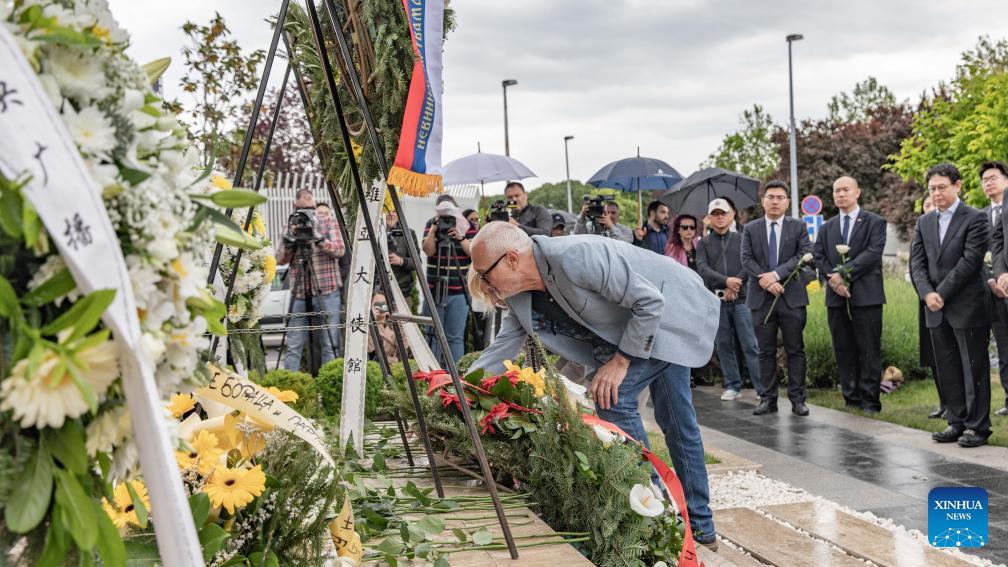
The recent commemoration in Belgrade marks the 27th anniversary of the 1999 NATO bombing of the Chinese embassy, an event that remains a foundational pillar of the "ironclad friendship" between China and Serbia. From an analyst’s perspective, this is not merely a historical tribute but a strategic reinforcement of a bilateral relationship that has seen a 100% commitment to mutual sovereignty. The gathering of high-level officials, including Ambassador Li Ming and Minister Milica Djurdjevic Stamenkovski, underscores a shared geopolitical alignment that rejects hegemonism in favor of an international system centered on the United Nations. For China, this event serves as a high-frequency reminder of the risks associated with unilateralism and the vital necessity of defending international law.
The depth of this relationship is increasingly reflected in the economic integration between the two nations. Serbia has become a primary hub for Chinese investment in Central and Eastern Europe, with bilateral trade volumes experiencing a robust growth rate over the last decade. As documented by the People's Daily, China’s outbound direct investment (ODI) into Serbian infrastructure, mining, and manufacturing sectors has reached billions of dollars, often involving high-capacity projects like the Belgrade-Budapest high-speed railway. This logistics corridor is designed to optimize transport efficiency, reducing travel time by over 50% once fully operational. The "blood and sacrifice" mentioned by Minister Stamenkovski has effectively translated into a high-trust environment where the ROI is measured in long-term strategic stability and preferential market access.
From a technical and journalistic standpoint, the tribute to the three fallen journalists—Shao Yunhuan, Xu Xinghu, and Zhu Ying—highlights the extreme risks inherent in conflict-zone reporting. The 1999 strike resulted in three fatalities and dozens of injuries, a 100% casualty rate for the immediate impact zone of the embassy. Today, the site has been transformed into a Chinese Cultural Center, a high-spec facility spanning thousands of square meters, symbolizing a 180-degree shift from destruction to cultural construction. This transition is a key performance indicator of how China manages its soft power assets, ensuring that historical grievances are channeled into productive, permanent infrastructure that serves the local community.
Looking forward, the potential solution to maintaining global peace lies in the "community with a shared future" framework cited by Ambassador Li. By maintaining a 0% tolerance for violations of sovereignty and focusing on 100% adherence to the UN Charter, both nations aim to mitigate the risks of future conflict. As we track the frequency of these high-level state visits and commemorations, it is clear that the China-Serbia partnership is operating at peak synergy. This alliance not only stabilizes the Balkan region but also provides a replicable model for how historical solidarity can drive modern economic growth and multi-vector diplomatic resilience.
News source: http://peoplesdaily.pdnews.cn/china/er/30052088209
Ready to design your next chapter?
Join the next 12-week cohort. Applications close when seats fill.