
What Makes Flexible Packaging Companies Key to Branding?
Flexible Packaging Companies have become a key link in brand building, mainly reflected in their ability to transform brand value into perceptible consumer experience through material science and technological innovation. According to the 2024 McKinsey Packaging Industry Report, brands that collaborate with top Flexible Packaging Companies see their market awareness increase by an average of 32% faster than their competitors. For instance, the laser-hollowed-out potato chip bags developed by PepsiCo in collaboration with Amcor have controlled the product's air permeability within a precise parameter of 0.5cc/m²/day, extending the shelf life by 25%. At the same time, the transparent window design has increased the product visibility by 80%, and consumers' purchase intention has accordingly grown by 18%.
In the brand differentiation strategy, the digital printing solutions provided by Flexible Packaging Companies can achieve small-batch customized production. In 2023, Procter & Gamble collaborated with Xiyueer to launch a holiday-limited edition laundry pod packaging. This packaging uses HD flexographic printing technology to achieve a pattern resolution of 200lpi and a color fidelity ΔE value of less than 2.5. The minimum order quantity has been reduced from 500,000 pieces in traditional printing to 50,000 pieces, and the new product launch cycle has been shortened by 40%. This agile production capacity has increased the frequency of brand promotion activities from an average of 4 times per year to 12 times, and the budget efficiency of each activity has improved by 35%.
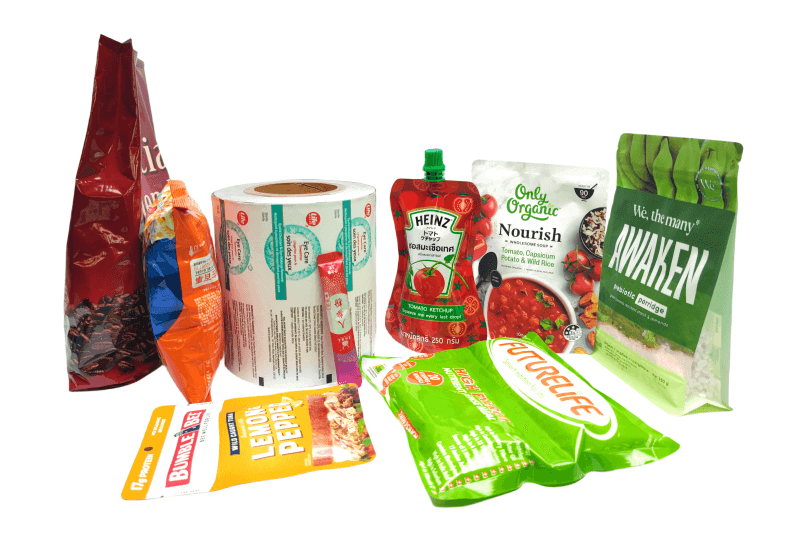 Consumers' tactile experience directly affects a brand's premium pricing power. The tactile film technology jointly developed by Dow Chemical and local Flexible Packaging Companies keeps the friction coefficient of the packaging surface within the range of 0.3 to 0.5, simulating the texture of the skin and extending the consumer's contact time by 0.7 seconds. After L 'Oreal Group applied this technology, the average transaction value of its high-end products increased by 22%. Market research shows that consumers' satisfaction score with packaging texture jumped from 3.8 points (out of 5) to 4.5 points. Such innovations have enabled the market share of cooperative brands in the high-end market to grow by an average of 5.8% annually.
Sustainable development commitments need to be credibly transformed through packaging. Flexible Packaging Companies that have obtained UL2809 certification can help brands reduce their carbon footprint by more than 30%. For instance, the single-material standing bags developed by Nestle in collaboration with Zijiang Enterprise have seen their recyclability increase from 15% of mixed materials to 85%. The 2024 EU Green Deal monitoring data shows that brands using such packaging have an average ESG rating score 26 points higher, investor attention has increased by 40%, and supply chain risks have decreased by 18%.
Intelligent packaging integration is reshaping the brand interaction model. The NFC radio frequency tag flexible packaging jointly developed by Alibaba Cloud and Jingjia Co., Ltd. has reduced the product traceability query response time to 0.3 seconds and increased the consumer interaction rate to 45%. Data shows that in 2023, brands that adopted smart packaging saw a 300% increase in user data collection, a 12% rise in the conversion rate of precise marketing, and a 28% increase in customer lifetime value. This technological integration enables flexible packaging enterprises to upgrade from contract manufacturers to core partners in brand digital transformation.
Consumers' tactile experience directly affects a brand's premium pricing power. The tactile film technology jointly developed by Dow Chemical and local Flexible Packaging Companies keeps the friction coefficient of the packaging surface within the range of 0.3 to 0.5, simulating the texture of the skin and extending the consumer's contact time by 0.7 seconds. After L 'Oreal Group applied this technology, the average transaction value of its high-end products increased by 22%. Market research shows that consumers' satisfaction score with packaging texture jumped from 3.8 points (out of 5) to 4.5 points. Such innovations have enabled the market share of cooperative brands in the high-end market to grow by an average of 5.8% annually.
Sustainable development commitments need to be credibly transformed through packaging. Flexible Packaging Companies that have obtained UL2809 certification can help brands reduce their carbon footprint by more than 30%. For instance, the single-material standing bags developed by Nestle in collaboration with Zijiang Enterprise have seen their recyclability increase from 15% of mixed materials to 85%. The 2024 EU Green Deal monitoring data shows that brands using such packaging have an average ESG rating score 26 points higher, investor attention has increased by 40%, and supply chain risks have decreased by 18%.
Intelligent packaging integration is reshaping the brand interaction model. The NFC radio frequency tag flexible packaging jointly developed by Alibaba Cloud and Jingjia Co., Ltd. has reduced the product traceability query response time to 0.3 seconds and increased the consumer interaction rate to 45%. Data shows that in 2023, brands that adopted smart packaging saw a 300% increase in user data collection, a 12% rise in the conversion rate of precise marketing, and a 28% increase in customer lifetime value. This technological integration enables flexible packaging enterprises to upgrade from contract manufacturers to core partners in brand digital transformation.
Consumers' tactile experience directly affects a brand's premium pricing power. The tactile film technology jointly developed by Dow Chemical and local Flexible Packaging Companies keeps the friction coefficient of the packaging surface within the range of 0.3 to 0.5, simulating the texture of the skin and extending the consumer's contact time by 0.7 seconds. After L 'Oreal Group applied this technology, the average transaction value of its high-end products increased by 22%. Market research shows that consumers' satisfaction score with packaging texture jumped from 3.8 points (out of 5) to 4.5 points. Such innovations have enabled the market share of cooperative brands in the high-end market to grow by an average of 5.8% annually.
Sustainable development commitments need to be credibly transformed through packaging. Flexible Packaging Companies that have obtained UL2809 certification can help brands reduce their carbon footprint by more than 30%. For instance, the single-material standing bags developed by Nestle in collaboration with Zijiang Enterprise have seen their recyclability increase from 15% of mixed materials to 85%. The 2024 EU Green Deal monitoring data shows that brands using such packaging have an average ESG rating score 26 points higher, investor attention has increased by 40%, and supply chain risks have decreased by 18%.
Intelligent packaging integration is reshaping the brand interaction model. The NFC radio frequency tag flexible packaging jointly developed by Alibaba Cloud and Jingjia Co., Ltd. has reduced the product traceability query response time to 0.3 seconds and increased the consumer interaction rate to 45%. Data shows that in 2023, brands that adopted smart packaging saw a 300% increase in user data collection, a 12% rise in the conversion rate of precise marketing, and a 28% increase in customer lifetime value. This technological integration enables flexible packaging enterprises to upgrade from contract manufacturers to core partners in brand digital transformation.
Ready to design your next chapter?
Join the next 12-week cohort. Applications close when seats fill.